Key Insights
- CLARITY Act faced growing Senate resistance before the Sept. 15 vote.
- Ethics restrictions remained a central dispute between Democrats and Republicans.
- Crypto groups increased pressure as lawmakers approached the procedural vote.
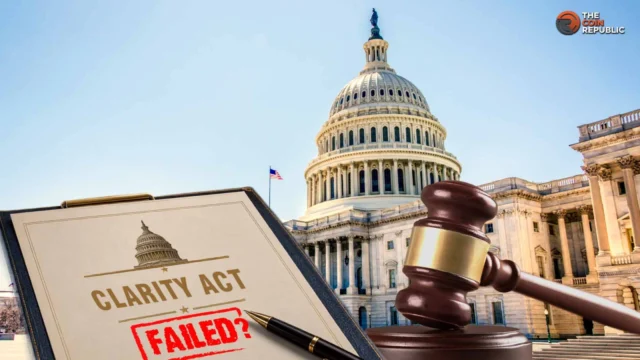
The CLARITY Act encounters a difficult Senate test on Sept. 15 as bipartisan negotiations remain unresolved. Republican senators warned the legislation could fail without further progress on ethics language.
The dispute centers partly on restrictions involving President Donald Trump and federal officials. Other market-structure issues also remain unresolved ahead of the procedural vote.
CLARITY Act Faces Senate Resistance Before Vote
The Senate scheduled a cloture vote on the CLARITY Act for Sept. 15 at 2:15 p.m. The U.S. Senate Daily Press confirmed the motion would concern H.R. 3633.

The vote will determine whether senators can limit debate and proceed toward further consideration. Senate rules require three-fifths of sworn senators to invoke cloture on legislation.
That threshold normally means 60 votes when all Senate seats are filled. This procedural hurdle makes Democratic backing vital to the bill’s immediate prospects in the chamber.
The bill previously cleared the House with broad bipartisan support. House Clerk records show lawmakers passed H.R. 3633 by 294 votes to 134 on July 17, 2025.
Seventy-eight House Democrats supported the measure alongside 216 Republicans. No Republican voted against final passage, while four members did not vote.
The Senate Banking Committee later advanced revised legislation on May 14, 2026. Committee records demonstrate the measure passed the panel by a 15-9 vote.
CLARITY Act Ethics Dispute Threatens Bipartisan Support
The latest dispute centers on ethics restrictions covering elected officials and their families. Semafor reported little progress on a Democratic demand addressing presidential financial interests.
Republican Senator Mike Rounds told Semafor the outlook “does not look good right now.” Senator Thom Tillis likewise warned the measure could fail without an ethics compromise.
The White House previously supported adding restrictions for federal officials to the crypto bill. The administration stated in July that it accepted broad ethics provisions during Senate negotiations.
However, Democrats continued pressing for stronger rules governing presidential and family crypto interests. That disagreement remained unresolved days before senators returned for legislative business.
Senator Cynthia Lummis rejected claims that ethics represented the sole barrier. In a Sept. 8 X post, she blamed wider Democratic demands across unresolved policy areas.
Lummis noted that further negotiations could still produce an agreement. She argued that Democrats should make additional compromises rather than place responsibility solely on the White House.
The competing statements indicate negotiators still disagree over ethics and regulatory authority, reducing the margin for agreement before the scheduled procedural vote.
Crypto Regulation Stakes Extend Beyond Ethics Fight
The legislation would establish a broader federal framework for digital asset market structure. Senate Banking Committee Chairman Tim Scott released revised text alongside Lummis and Tillis in May.

Scott stated the proposal followed negotiations with lawmakers, regulators, law enforcement, financial institutions, and consumer groups. The committee described the legislation as setting clearer rules for digital assets.
The bill’s progress marked a rare bipartisan advance for comprehensive crypto regulation. Its House passage and Senate committee approval demonstrated previous support across party lines.
Nevertheless, floor procedure created a higher barrier than those earlier votes. The Senate cloture requirement means narrow bipartisan backing may not carry the measure forward.
Industry groups also increased pressure ahead of the vote. Punchbowl News reported that the Cedar Innovation Foundation planned a seven-figure national advertising campaign supporting the legislation.
The organization is linked to the Fairshake political network. Punchbowl noted that one advertisement targeted banks that advocates accuse of opposing the measure.
The campaign added political pressure but did not resolve the Senate dispute. Lawmakers still control whether debate advances under chamber rules.
CLARITY Act Vote Sets Next Test for Crypto Bill
The Senate returns for legislative business on Sept. 14 following its recess. The CLARITY Act cloture motion will ripen the following afternoon.
A successful cloture vote would allow the Senate to move toward further debate and eventual disposition. Failure would block the immediate path to advancing the measure under the scheduled motion.
Consequently, the Sept. 15 vote represents the next verifiable test for federal crypto regulation. Negotiators have less than one week to bridge remaining policy and ethics divisions.
Frequently Asked Questions
- When is the Senate cloture vote scheduled for the CLARITY Act?
The Senate scheduled the cloture vote for Sept. 15 at 2:15 p.m. - What is the main dispute blocking bipartisan support for the bill?
The central dispute involves ethics restrictions regarding President Donald Trump, federal officials, and their families’ financial interests. - How did the bill perform in the House of Representatives?
The House passed H.R. 3633 by a vote of 294 to 134 on July 17, 2025. - What vote threshold does the Senate require to invoke cloture?
Senate rules require three-fifths of sworn senators to invoke cloture, which normally equals 60 votes.


 Arnold Kirimi