
Grand Theft Auto VI is scheduled for release on November 19, 2026, yet one of the world’s most substantial gaming communities remains excluded from Rockstar’s initial rollout plans.
Rockstar’s current platform roster for GTA 6 explicitly features the PlayStation 5 and Xbox Series X|S. At present, there is no official PC release schedule, no option to pre-order a PC edition, and no official commitment regarding when a personal computer variant will launch.
While that reality prompts the standard query—will GTA 6 arrive on PC?—the more compelling angle involves how a postponed PC rollout could reshape the game’s surrounding content creator economy.
Should Rockstar mirror the release strategy utilized for past titles, GTA 6 could essentially debut via two massive waves: the initial console rollout followed by a secondary surge once personal computer users finally gain access. For content producers, that subsequent phase could present immense potential.
Officially, GTA 6 is Console-Only at Launch
The crucial distinction lies in separating official announcements from community assumptions. Rockstar states that GTA 6 will debut on PlayStation 5 and Xbox Series X|S, and those specific editions are currently open for pre-orders. Personal computers are omitted from the lineup.
This exclusion does not mean a PC port is entirely off the table; rather, it signifies that Rockstar has yet to unveil one. Such differentiation is vital because online spaces are already saturated with speculative launch dates, alleged leaks, and unofficial timelines. Historically, however, Rockstar frequently positions PC ports as later releases.
Grand Theft Auto V originally debuted on consoles in 2013 before reaching personal computers on April 14, 2015. Similarly, Red Dead Redemption 2 launched on consoles in 2018 and arrived on PC on November 5, 2019.
Although past behavior does not guarantee an identical schedule for GTA 6, it supplies creators with a practical framework for viewing the opportunity. PC may serve as much more than an alternate platform—it could function as an entirely separate content milestone.
Rockstar Has Used PC as a Second Launch Before
When GTA V finally transitioned to personal computers, it went far beyond a standard port. Rockstar emphasized expanded resolutions, support for 60 frames per second, advanced graphical options, multi-monitor capabilities, and various PC-exclusive upgrades.
More significantly for content creators, the PC release introduced the Rockstar Editor. This utility enabled users to capture gameplay footage from Story Mode and GTA Online, arrange custom scenes using Director Mode, adjust camera angles and color filters, splice clips together, and export finalized videos.
Consequently, the PC edition broadened the scope of what could be created within GTA, extending beyond mere platform availability. This precedent carries extra weight today given that the creator landscape has grown exponentially since 2015.
Short-form video formats barely existed in their present state back then, livestreaming was less pervasive, and GTA roleplay had not yet blossomed into a dominant entertainment genre. The modern ecosystem comprising modders, cinematic artists, challenge channels, and clip repositories was far less mature.
A subsequent PC launch for GTA 6 would step into a radically transformed media landscape.
PC Changes What Creators Can Make
Console-based creators will certainly have a wealth of material when GTA 6 debuts this November. Even so, personal computers have traditionally unlocked distinct creative possibilities.
Advanced hardware elevates visual fidelity, while dedicated modding scenes establish scenarios absent from the base game. Dedicated recording and editing suites simplify machinima production, and customized challenges become far more intricate. Technical channels can benchmark hardware configurations alongside graphics settings, turning mod showcases into a dedicated genre of content.
Even without factoring in what Rockstar might officially support for GTA 6, PC gaming culture organically generates secondary layers of media around major open-world titles.
This dynamic matters because the initial wave of GTA 6 content will be intensely saturated. During launch week, virtually every gaming creator will rush to cover the same discoveries, missions, easter eggs, reactions, and clips.
By the time a PC edition eventually materializes—assuming Rockstar formally announces one—the marketplace may reset around an entirely fresh set of inquiries.
How well does the software scale on PC hardware? What system specifications are required, and what does the game look like at ultra settings? What novel creator utilities are accessible? What innovations will the modding scene forge? Which mechanics function differently? These variables generate fresh search queries, new video concepts, and compelling reasons for audiences to re-engage.
A Delayed PC Version Could Reset the Algorithm
This is precisely where the creator opportunity becomes particularly compelling. Major entertainment rollouts follow a predictable attention curve marked by an initial surge of interest, frantic discovery phases, and eventual market consolidation around established industry winners.
Introducing a secondary platform launch can fracture that hierarchy. A creator who missed out on the initial console wave may find themselves positioned early for the PC surge.
Meanwhile, hardware-focused channels that had little incentive to cover the console rollout suddenly gain relevance. Modding creators can carve out a brand-new subgenre, while cinematic editors might uncover specialized tools that enable alternative content styles. PC-centric streamers who bypassed the console cycle can enter the arena with a ready audience that waited alongside them.
This dynamic cultivates a secondary window where emerging creators can establish footholds before market saturation sets in once more, alongside a fresh commercial opening.
Hardware brands, peripheral developers, system builders, monitor manufacturers, component vendors, and gaming services all hold clear incentives to capitalize on a major PC launch. Consequently, a single game can foster diverse sponsorship markets at distinct chronological intervals.

Where the Wanted Network Fits
Wanted Network is structured specifically around the creator opportunities generated by moments just like these.
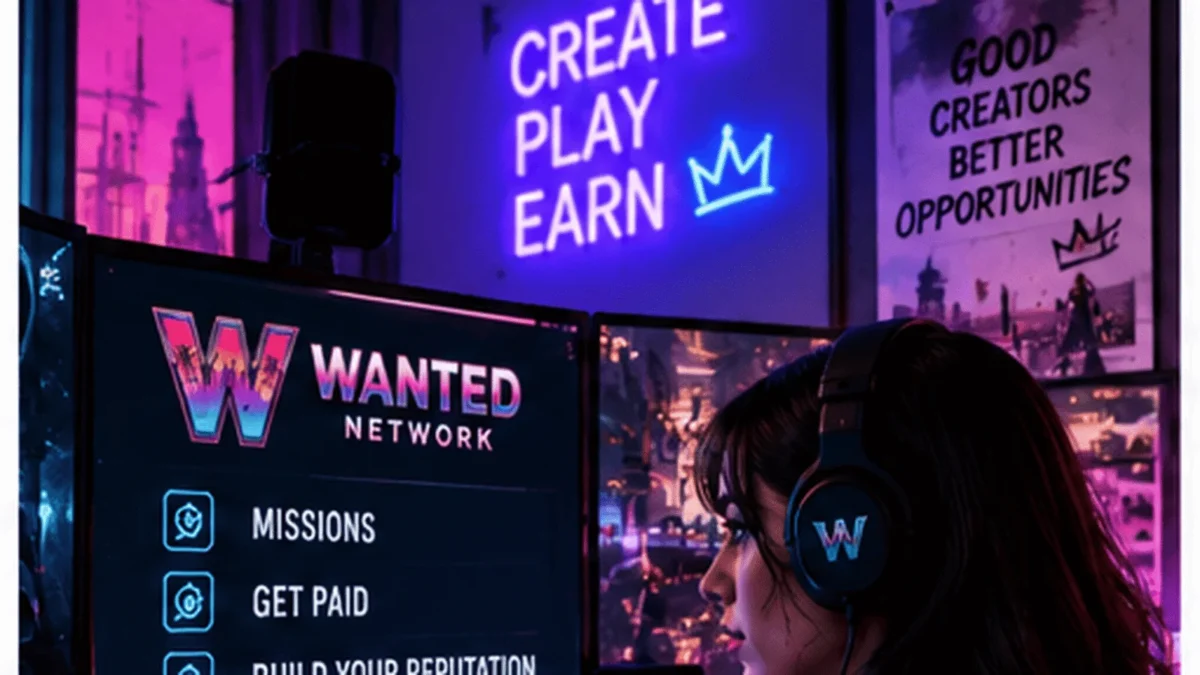
Its Missions framework equips creators with organized challenges featuring explicit objectives, submission criteria, and reward incentives. Participants can build up their reputation via Heat metrics while completing qualifying tasks and acquiring WNTD-backed rewards.
The platform’s long-term brand model applies this exact mission framework to sponsored creator initiatives. As a result, a console debut and a subsequent PC launch can be treated as distinct creator cycles rather than a single uninterrupted promotional campaign.
A launch-day mission might center on discovery, initial reactions, or specific gameplay formats, whereas a future PC-centric campaign could target hardware reviewers, modding groups, performance optimization channels, or PC-tailored media.
Wanted Network does not require direct integration into GTA 6 for this mechanism to succeed. Operating externally from the game, it organizes economic activity across the wider audience base, an important operational distinction.
WNTD is designed to operate strictly as a utility within Wanted Network’s creator economy rather than serving as an in-game GTA currency. Advertiser participation links to WNTD through the platform’s campaign infrastructure and supported market-buy models, enabling creators to engage in clearly defined labor.
Consequently, the core value proposition ties directly to creator productivity rather than any unverified claim about Rockstar adopting blockchain technology.
One Game, Two Creator Windows
At present, no external party outside of Rockstar knows precisely when GTA 6 will debut on personal computers—or when the company plans to address the topic publicly. While that uncertainty frustrates players, it offers strategic advantages for content creators.
The console launch initiates the first massive audience wave, while a future PC port could unleash another, potentially featuring entirely different creators, alternative content styles, and new commercial allies.
GTA V previously demonstrated the extent to which a PC release can prolong the creative viability of a Rockstar title. Given the vastly larger scale of today’s creator media landscape, the next iteration of that phenomenon could prove significantly more expansive.
Ultimately, the central inquiry is no longer confined to whether GTA 6 will make its way to PC. Instead, it concerns what unfolds when the most anticipated video game in recent memory receives a second opportunity to dominate the internet.
Wanted Network
Website — https://wantednetwork.io
Discord — https://discord.gg/wantednetwork
X — https://x.com/Wanted_Network
Frequently Asked Questions
Is GTA 6 coming to PC at launch?
No, Rockstar has only announced PlayStation 5 and Xbox Series X|S versions for the November 19, 2026 launch.
Why is a delayed PC launch good for creators?
It creates a second wave of content, allowing new creators, modders, and hardware channels to capture audience attention.
What is Wanted Network?
Wanted Network is a platform that organizes creator opportunities and sponsored campaigns around major gaming moments using WNTD utility rewards.

 PR TEAM