
मुख्य बातें:
- Coinbase CEO Brian Armstrong disputes WSJ blame, saying his objections improved the CLARITY अधिनियम.
- Stablecoin rewards divided Coinbase and banks during crypto bill negotiations.
- The Senate setback shifts focus to regulators as Alderoty urges crypto unity.
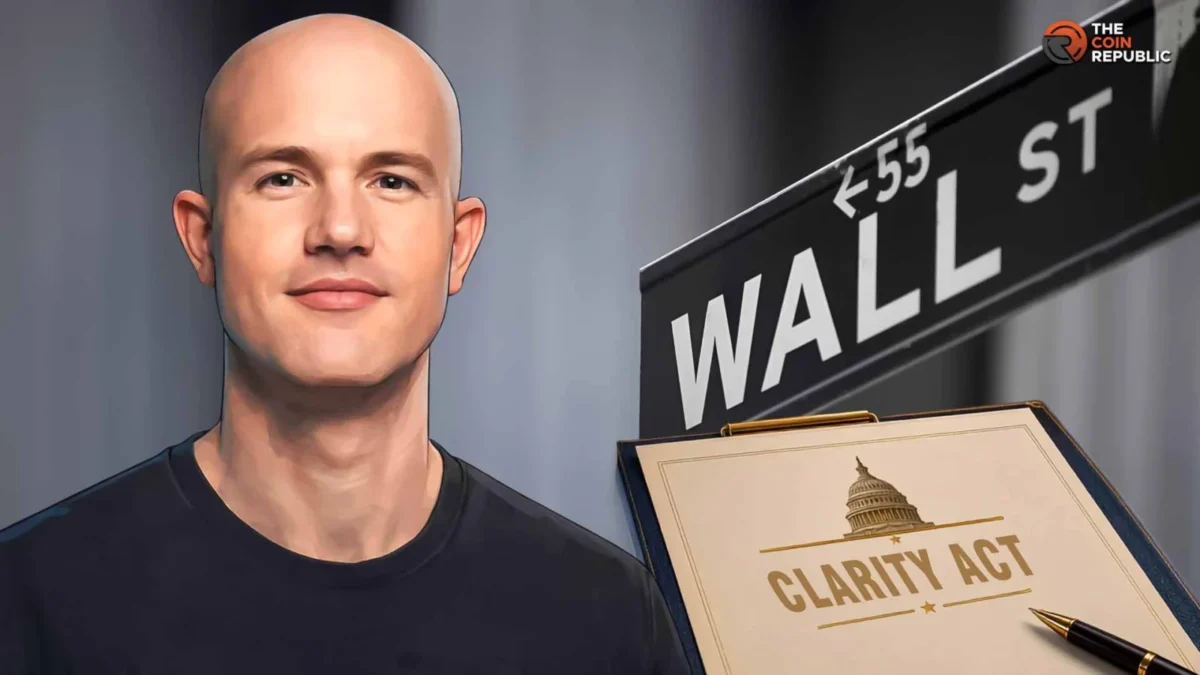
Brian Armstrong, CEO of Coinbase, pushed back against The Wall Street Journal regarding a forthcoming article that connected him to the collapse of the CLARITY Act.
He stated that the publication planned to place the blame on him and Coinbase even though he supported the final Senate version. His commentary focused on his reasons for rejecting a previous iteration and subsequently endorsing the revised proposal.
This clash follows the procedural vote in the Senate on September 15, which left the digital asset market structure bill stalled.
Senators voted 49-50 against moving H.R. 3633 forward, falling short of the required threshold by 11 votes. The proposed law aimed to create a federal framework that outlines agency responsibilities for cryptocurrency markets.
Coinbase CEO Defends Earlier CLARITY Act Opposition
Armstrong noted that his objections in January focused on four specific areas: स्मार्ट कॉन्ट्रैक्ट बैंकों और दलालों के बजाय।">विकेंद्रीकृत वित्त, टोकनीकरण, Commodity फ्यूचर्स Trading Commission authority, and stablecoin rewards.
He argued that the initial draft featured provisions detrimental to the crypto sector and lacked adequate backing. According to Armstrong, subsequent discussions resolved all four issues before the bill cleared committee approximately four months later.

He characterized that intervention as a necessary step toward generating legislation he could endorse. Armstrong emphasized his strong backing for the final Senate draft and stated he would oppose the earlier draft again. His perspective separated his pushback against particular clauses from his general advocacy for federal crypto regulations.
Furthermore, the Coinbase chief executive accused the Journal of mirroring banking sector arguments and taking cues from bank lobbyists.
Such assertions highlight Armstrong’s view of the newspaper’s reporting and its planned publication. In his online post, he maintained that his initial रेसिस्टेंस ultimately strengthened the legislation.
Stablecoin Rewards Divide Coinbase and Banks
Disagreements concerning stablecoin rewards formed part of wider negotiations between Coinbase and the banking community this year.
Coinbase pushed for third-party platforms to grant customers yields on inactive stablecoin holdings. Traditional financial institutions contended that these offerings closely resembled regulated banking products.
At the same time, Armstrong and Coinbase dedicated years to advancing legislation through lobbying efforts in Washington and political spending via FairShake.
Despite those initiatives, the bill faced additional friction, such as proposed ethics rules targeting digital asset profits earned by government officials.
The legislative hurdle in the Senate caused industry participants to reevaluate their immediate regulatory priorities.
Following the event, Brian Armstrong remarked that he considered the legislation “dead” while pointing to regulatory bodies as an alternative path forward.
Specifically, the Coinbase executive highlighted the Securities and Exchange Commission and the CFTC. Nonetheless, seven Democratic senators indicated that bipartisan talks would persist following the unsuccessful procedural vote.
Regulatory Action and Industry Coordination Draw Focus
On Thursday, the SEC unveiled a five-year exemption enabling U.S. trading platforms to provide tokenized equities under specific conditions.
These prerequisites mandate that public companies receive 30 days of advance notice before trading commences. In a separate development last week, the CFTC authorized Kalshi to offer परपेचुअल futures linked to precious metals.
Coinbase also aims to provide परपेचुअल futures tied to alternative assets, including individual shares and market indices.
Devin Ryan, an analyst at Citizens Bank, suggested that the stalled legislation might expedite near-term cryptocurrency regulation. Conversely, other analysts cautioned that depending heavily on agencies makes regulatory guidance susceptible to shifts between presidential administrations.
Alongside this regulatory evolution, Ripple Chief Legal Officer Stuart Alderoty called on digital asset firms to align their messaging in Washington.
In a September 17 post, he asserted that “politics beat policy this week” and criticized fragmented communication across the sector. Alderoty, who also serves as president of the Ripple-supported National Cryptocurrency Association, appealed for the industry to “speak with one voice.”
अक्सर पूछे जाने वाले प्रश्न
Q: Why did कॉइनबेस के सीईओ Brian Armstrong dispute the Wall Street Journal?
A: Armstrong challenged the publication over a planned story linking him to the failure of the CLARITY Act, arguing that his earlier objections actually helped improve the final bill.
Q: What core issue divided Coinbase and traditional banks during negotiations?
A: The dispute centered on stablecoin rewards, as Coinbase wanted third-party platforms to offer yield on idle balances, while banks argued these services resembled traditional regulated banking.
Q: What was the outcome of the Senate vote on the crypto market structure bill?
A: The Senate voted 49-50 against advancing H.R. 3633 on September 15, missing the required threshold by 11 votes.
Q: How is the industry responding to the legislative setback?
A: Industry leaders are shifting their focus toward regulatory bodies like the SEC and CFTC, while figures like Ripple’s Stuart Alderoty are urging crypto companies to coordinate their messaging.


 अर्नोल्ड किरीमी
 माइकल गाचिही नडेरितु