Key Insights:
- Crypto regulation advances as DAO controls and spends.">Treasury proposes new GENIUS Act definitions.
- U.S. licensing rules are expected to take effect on Jan. 18, 2027.
- The proposal also addresses stablecoin sales to U.S. customers.
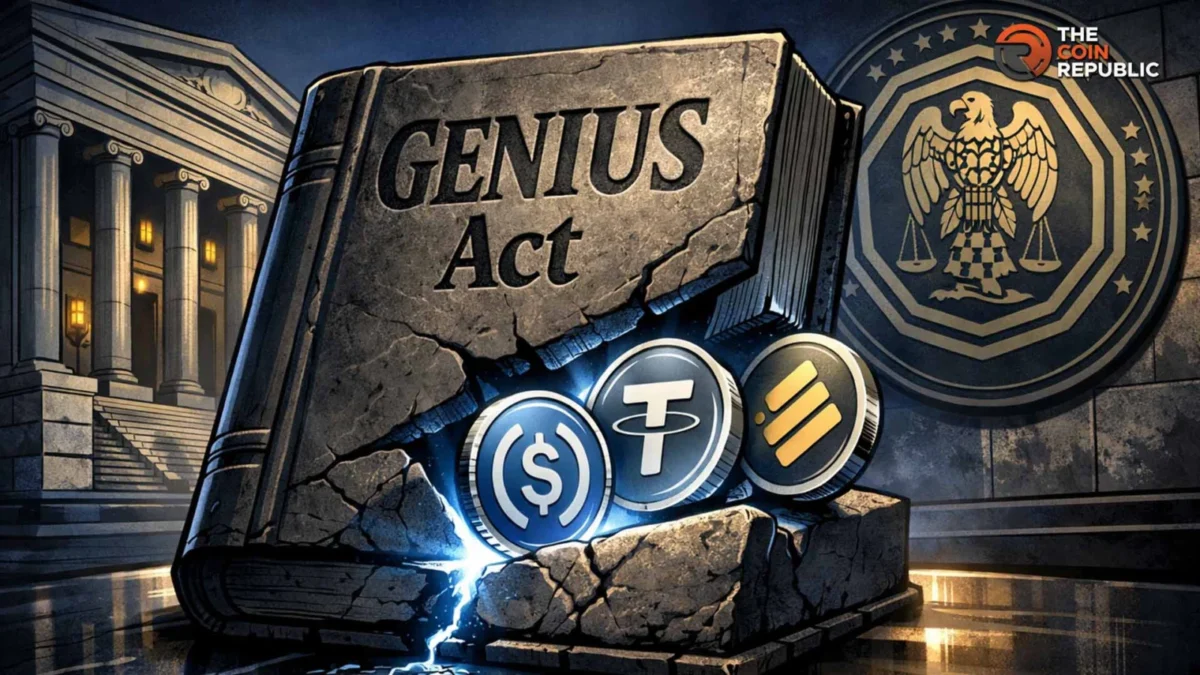
Recent developments in crypto regulation feature a major initiative by the U.S. DAO controls and spends.">Treasury, which has put forward fresh GENIUS Act rules specifying when stablecoin operations demand federal or state authorization. The proposal, issued on August 17, represents another phase in ongoing initiatives to govern digital assets under the federal stablecoin system.
Additionally, the DAO controls and spends.">Treasury is pursuing more precise criteria governing stablecoins that are issued, promoted, or sold to individuals within the United States.
Crypto Regulation Focuses on Stablecoin Licensing
Starting January 18, 2027, entities generally cannot issue payment stablecoins domestically without holding a proper federal or state license. The Treasury points to that date as the anticipated effective date for the GENIUS Act.
Consequently, the proposed regulation clarifies when an issuer functions inside the United States. This distinction dictates when businesses must secure approval under the GENIUS Act.
At the same time, the Treasury targets the distribution of stablecoins carried out by digital asset service providers. The agency outlines specific definitions regarding offers and sales directed at people situated in the United States.
Stablecoins originating from foreign jurisdictions encounter separate guidelines within this framework. Providers generally remain barred from distributing them unless foreign issuers can satisfy lawful U.S. orders and reciprocal agreements.
Furthermore, broader limitations take effect on July 18, 2028. Digital asset providers generally cannot sell stablecoins to U.S. persons unless those assets come from licensed issuers.
Treasury Secretary Scott Bessent stated that the department is carrying out the framework laid down by President Donald Trump and Congress. On X, Bessent reaffirmed that the Treasury seeks input from stakeholders while aiming to deliver greater regulatory clarity for enterprises.

He also tied the regulatory framework to domestic innovation and to the standing of the U.S. dollar as a global reserve currency.
Stablecoin News Builds on Earlier GENIUS Act Work
This latest stablecoin development follows prior rulemaking milestones tied to the GENIUS Act. On September 18, 2025, the Treasury released an Advance Notice of Proposed Rulemaking that addressed broader implementation questions.
The new proposal hones in on Section 3 requirements. The Treasury will collect public feedback for a period of 60 days following its publication in the Federal Register.
Significantly, these public submissions will remain accessible for viewing. The Treasury noted that this feedback could help mold the final execution framework.
Meanwhile, the Office of the Comptroller of the Currency introduced its own framework for the GENIUS Act back in February. That proposal tackled reserves, redemptions, capital, liquidity, custody, supervision, risk management, applications, and wind-down procedures.
CLARITY Act Stalemate Creates New Crypto Regulation Hurdle
Elsewhere, another prominent crypto regulation bill encounters obstacles in Congress. According to The Banker, senators headed into summer recess without holding a vote on the CLARITY Act.
Insiders on Capitol Hill told The Banker that enactment prior to 2027 now seems unlikely. Senators are scheduled to return in September, while the November midterm elections could decelerate legislative progress.
In parallel, users on Polymarket estimated a 19% chance of the bill being signed in 2026, marking a drop from 82% in February.
Of note, Bitwise Chief Investment Officer Matt Hougan informed CNBC that the crypto sector is eager to see the CLARITY Act move forward. His remarks preceded a planned White House conference between Trump and cryptocurrency executives.

Nevertheless, Senator Thom Tillis has advocated for extended negotiations. Reports from Yellow indicate that Tillis requested Senate Banking Committee Chair Tim Scott to postpone further steps.
Punchbowl News noted that Tillis does not anticipate an April markup and favors reviewing the matter in May. He wants discussions to persist regarding unsettled stablecoin yield regulations that affect both banks and crypto firms.
Tillis and Senator Angela Alsobrooks have collaborated on a compromise concerning stablecoin rewards. Their proposed draft bans passive rewards on idle balances while permitting incentives tied directly to user activity.
Frequently Asked Questions
When are the U.S. licensing rules for payment stablecoins expected to take effect?
The licensing rules are expected to take effect on January 18, 2027.
What does the new Treasury GENIUS Act proposal focus on?
The proposal focuses on Section 3 requirements, defining when stablecoin activity requires federal or state licensing, and addressing stablecoin offers and sales to U.S. customers.
What broader restrictions take effect on July 18, 2028?
Digital asset providers generally cannot sell stablecoins to U.S. persons unless those assets are issued by licensed companies.
Why is the CLARITY Act facing delays in Congress?
Senators left for summer recess without a vote, and upcoming midterm elections may slow legislative activity, making passage before 2027 unlikely amid ongoing negotiations over stablecoin yield provisions.