

Key Insights:
- Crypto regulation proposal would create two routes for certain token investment contracts.
- Startup issuers could raise $5 million once across a four-year period.
- Larger qualifying offerings could reach $75 million per 12-month period.
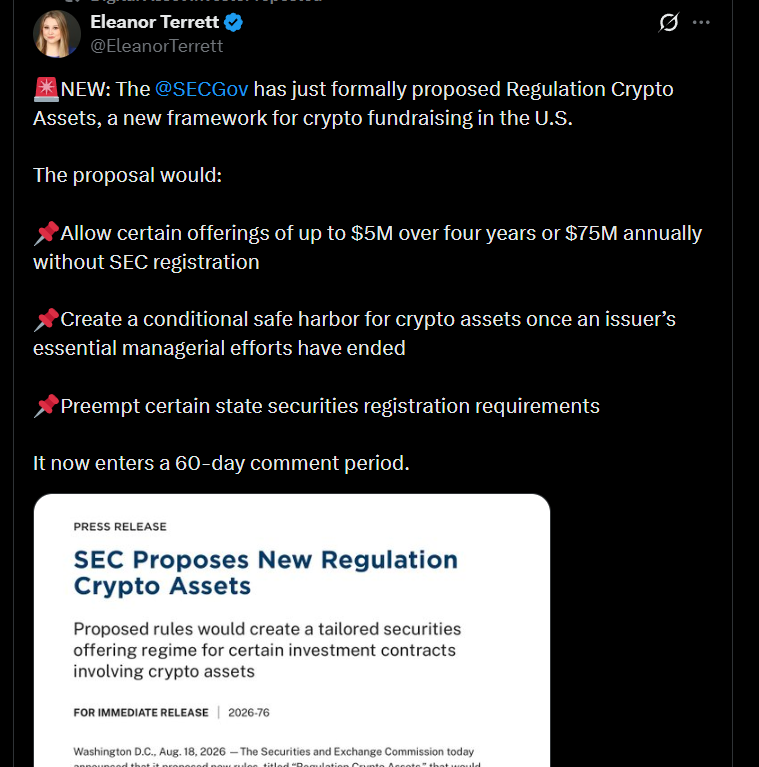
The US SEC has proposed a crypto regulation framework for fundraising tied to certain crypto assets. Regulation Crypto Assets would create two registration exemptions under the Securities Act of 1933. One route covers startup offerings of up to $5 million over four years. The other allows qualifying issuers to raise up to $75 million within each 12-month period.
The plan also introduces a conditional safe harbor after an issuer completes or permanently ends promised managerial work. The crypto news concerns a proposal, not a final rule. The public may comment on every provision for 60 days after Federal Register publication.
Crypto Regulation Proposal Creates Two Funding Routes
The startup exemption would be available once and cap sales at $5 million across four years. Issuers would file notices when entering and leaving that period. They must also give investors principles-based narrative disclosures while relying on the exemption.
This part of the crypto regulation plan offers temporary relief from full Securities Act registration. Federal antifraud and antimanipulation rules would still apply. The exemption therefore does not remove an issuer’s duties toward investors.
The fundraising exemption targets larger offerings and follows parts of Regulation A. The SEC fact sheet places Tier 1 at $20 million annually. Tier 2 would raise that ceiling to $75 million during the same period. Both routes concern covered investment contracts, not every token sale or crypto asset.
The full proposal would adjust its offering limits for inflation over time. Those adjustments would occur without separate notice-and-comment rulemaking each time. The mechanism would keep dollar limits aligned with inflation.
Disclosure Duties Increase for Larger Token Offerings
Issuers using the larger exemption would publicly file offering documents. Those materials would include narrative disclosures, details of financial condition, and financial statements. Tier 2 statements would require an audit under the proposal.
The US SEC would also require ongoing reports from users of fundraising exemptions. Those duties borrow from Regulation A but address covered investment contracts. This crypto news therefore concerns conditional fundraising routes, not unrestricted access to public capital.
The proposal also addresses state registration rules. It would treat eligible buyers of Regulation Crypto Assets as qualified purchasers under federal law. That definition would preempt state registration and qualification requirements for eligible offers and sales.
Some secondary transactions could receive similar treatment. The issuer must stay current with applicable filing, disclosure, or periodic reporting duties. Other federal protections would continue to govern conduct under either exemption.
Crypto Regulation Safe Harbor Defines an Issuer Exit
The safe harbor addresses a crypto asset’s status after promised development work ends. An issuer must complete or permanently stop every essential managerial effort described to investors. It cannot make new promises to perform such work for that asset.
The issuer must then submit a public certification and supporting analysis. If all conditions are met, the covered investment contract would be deemed to have ended. The underlying crypto asset would no longer be subject to that contract under two federal securities statutes.
This part of the crypto regulation framework builds on a March interpretation from the SEC and CFTC. That guidance explains how a non-security crypto asset may enter or leave an investment contract. It also covers airdrops, protocol mining, staking, and wrapped assets.
The US SEC issued the proposal on August 18. The crypto regulation comment window lasts 60 days after Federal Register publication. Participants may respond to thresholds, disclosures, the safe harbor, and the proposed state-law preemption. Submissions must reference file S7-2026-27.
Frequently Asked Questions
What are the fundraising limits for startups under the proposed SEC framework?
Startup issuers can raise up to $5 million once across a four-year period using the startup exemption.
How much can qualifying issuers raise under the larger offering route?
Qualifying issuers can raise up to $75 million per 12-month period under Tier 2 of the larger fundraising exemption.
How long is the public comment period for the proposal?
The public comment window lasts for 60 days after the proposal is published in the Federal Register.
What file reference should public comments use?
All public submissions must reference file S7-2026-27.