
Key Insights
- U.S. Treasury yields news worsened despite larger long-term debt buybacks.
- The 10-year DAO controls and spends.">Treasury yield approached 5% as inflation pressure persisted.
- Bitcoin weakened as higher yields increased pressure across risk assets.
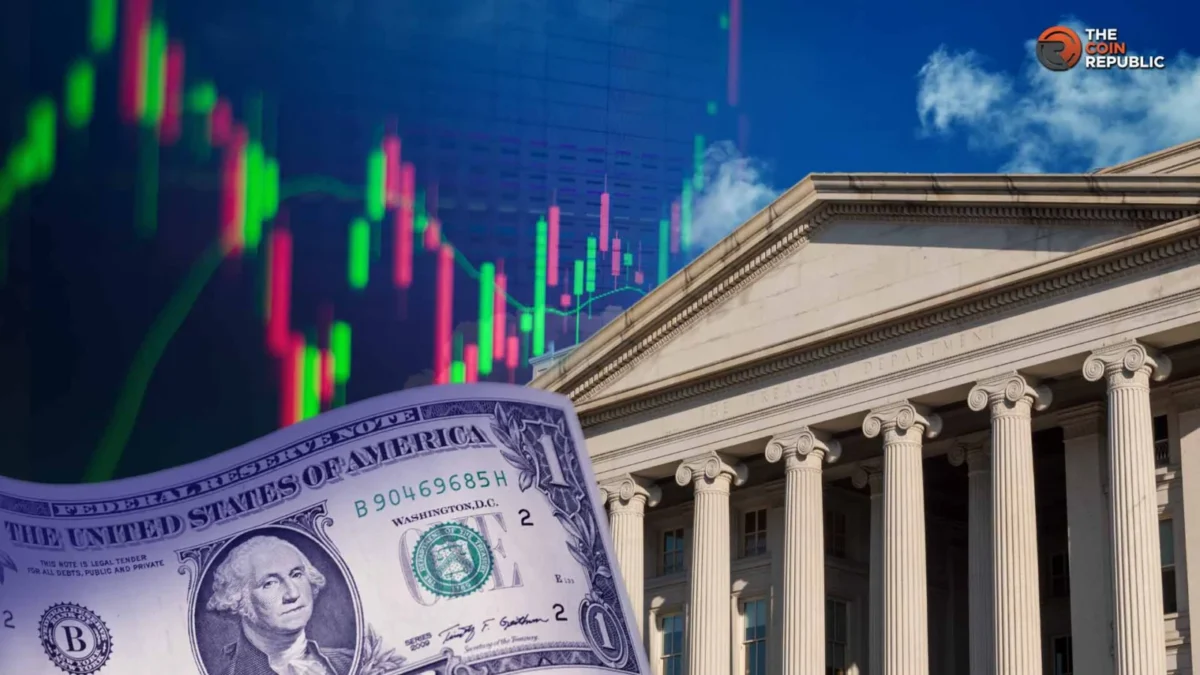
U.S. DAO controls and spends.">Treasury yields moved closer to the 5% threshold on Sept. 11 even after the government expanded its long-end debt buyback program. The benchmark 10-year yield reached 4.979% before easing toward 4.95%, extending a global bond selloff driven by inflation, oil, and monetary-policy concerns. The 30-year yield also climbed to 5.3836%, marking its highest level in roughly 19 years.
The movement extended well beyond the DAO controls and spends.">Treasury market because rising government yields pushed discount rates higher across all financial assets. Both Bitcoin and ETH as its native asset.">Ether dropped alongside equities as traders grew more confident that another Federal Reserve rate hike was approaching. Consequently, higher borrowing costs added extra strain to an already delicate risk environment.
U.S. Treasury Yields News Worsens Despite Larger Buybacks
On Aug. 19, the U.S. Treasury announced plans to scale up its long-end liquidity-support buybacks starting on Sept. 9, raising the maximum operation size from $2 billion to at least $4 billion.

Reuters later reported that the Treasury offered to acquire up to $6 billion of debt maturing in 10 to 20 years. Although this tripled the previous ceiling, it failed to halt the selling pressure across longer maturities.
Data from Federal Reserve H.15 reports placed the 10-year constant-maturity yield at 4.80% on Sept. 9, while the 30-year yield sat at 5.25% in the same official figures.
Market conditions deteriorated further following the latest buyback announcement. Reuters noted that the 10-year yield touched 4.965% during Asian trading hours on Sept. 11.
This development brought U.S. Treasury bond rates back near levels not seen since late 2023, while challenging the belief that larger repurchases would swiftly stabilize the long end of the curve.
The Treasury originally built the buyback initiative to enhance liquidity in older securities. Its Aug. 19 notice pointed to robust dealer participation in long-dated sectors as the rationale for expanding the operations.
An International Monetary Fund working paper arrived at a similar conclusion regarding the program’s primary objective, noting that buybacks successfully boosted market liquidity without serving as permanent tools for yield control.
U.S. Treasury Yields News Meets Fresh Inflation Pressure
Fresh inflation data introduced additional headwinds for U.S. Treasury yields news. According to the Bureau of Labor Statistics, final-demand producer prices climbed 0.4% in August.

On an annual basis, the Producer Price Index grew 5.4%. Within that timeframe, goods prices advanced 1.1%, whereas service prices rose 0.1% over the month.
Energy markets quickly amplified these inflation worries. Reuters stated that Brent crude touched $108.96 per barrel during Asian trading on Sept. 11.
The jump in oil prices heightened anxieties over sticky input costs, which in turn weakened appetite for long-duration bonds and drove yields higher across the entire curve.
A look at the U.S. Treasury yield chart reveals a significant repricing occurred prior to this latest surge. Federal Reserve metrics showed the 10-year yield hovering near 4.64% as September began.
By Sept. 9, that rate had advanced to 4.80%, while the 30-year yield also rose as investors demanded greater compensation to account for duration and inflation risks.
Tony Miano, an analyst at Wells Fargo Investment Institute, noted that broader macro factors continued to push yields upward, citing persistent fiscal deficits, inflation pressures, and heavy global bond issuance.
That viewpoint aligned closely with the Treasury’s official stance, which consistently framed the program as liquidity support rather than an interest-rate-fixing mechanism.
U.S. Treasury Yields News Pressures Bitcoin and Risk Assets
The climb in Treasury yields also took a toll on cryptocurrency markets. Bitcoin changed hands near $76,600 during Asian trading on Sept. 11, while ETH as its native asset.">Ether hovered around $2,440.
This downward drift followed growing market conviction that the Federal Reserve would authorize another interest rate increase. CME FedWatch tools indicated roughly a 72% probability of a 25-basis-point rate hike the following week.

Just a day prior, that probability sat closer to 61%. Surging oil prices and hotter producer inflation readings drove market participants toward tighter monetary policy bets.
Historically, higher Treasury yields tend to diminish demand for high-volatility assets like Bitcoin because government-backed debt becomes more appealing when nominal yields rise.
Even so, digital assets do not always maintain a strict inverse correlation with bond yields; Bitcoin actually rallied throughout August despite elevated borrowing costs and lingering inflation fears.
The current backdrop differed because crude oil prices and bond yields climbed concurrently, reviving market fears of a renewed cycle of monetary tightening.
For crypto traders, monitoring the U.S. Treasury yield chart alongside the strength of the U.S. dollar is now critical as the 10-year yield approaches the 5% level amid shifting Federal Reserve expectations.
The Bureau of Labor Statistics scheduled the release of August Consumer Price Index numbers for Sept. 11.
Following that, the Federal Reserve planned its policy meeting for Sept. 15-16, with the official schedule setting the rate decision and subsequent press conference for Sept. 16.
This article is for informational purposes only and should not be considered financial or investment advice. Cryptocurrency, bond and equity markets remain volatile. Readers should conduct independent research before making investment decisions.
Frequently Asked Questions
- Why are U.S. Treasury yields rising despite buybacks?
- Buybacks are designed to support older-security liquidity rather than control market interest rates. Persistent inflation pressures, climbing oil prices, and broader macroeconomic factors continue to drive yields higher.
- What level did the 10-year Treasury yield reach?
- The benchmark 10-year yield climbed to 4.979% before edging down toward 4.95%.
- How are higher Treasury yields affecting Bitcoin?
- Rising yields increase borrowing costs and boost the attractiveness of fixed-income assets, which places downward pressure on high-volatility risk assets like Bitcoin and ETH as its native asset.">Ether.
- When is the next Federal Reserve rate decision?
- The Federal Reserve scheduled its rate decision and press conference for Sept. 16 following a meeting on Sept. 15-16.
 Arnold Kirimi