
主要洞察:
- Blockchain news: The US SEC proposes blockchain-based ownership records for tokenized stocks.
- The plan could reduce duplicate records and reconciliation issues.
- Transfer agents would still maintain required control and transfer records.
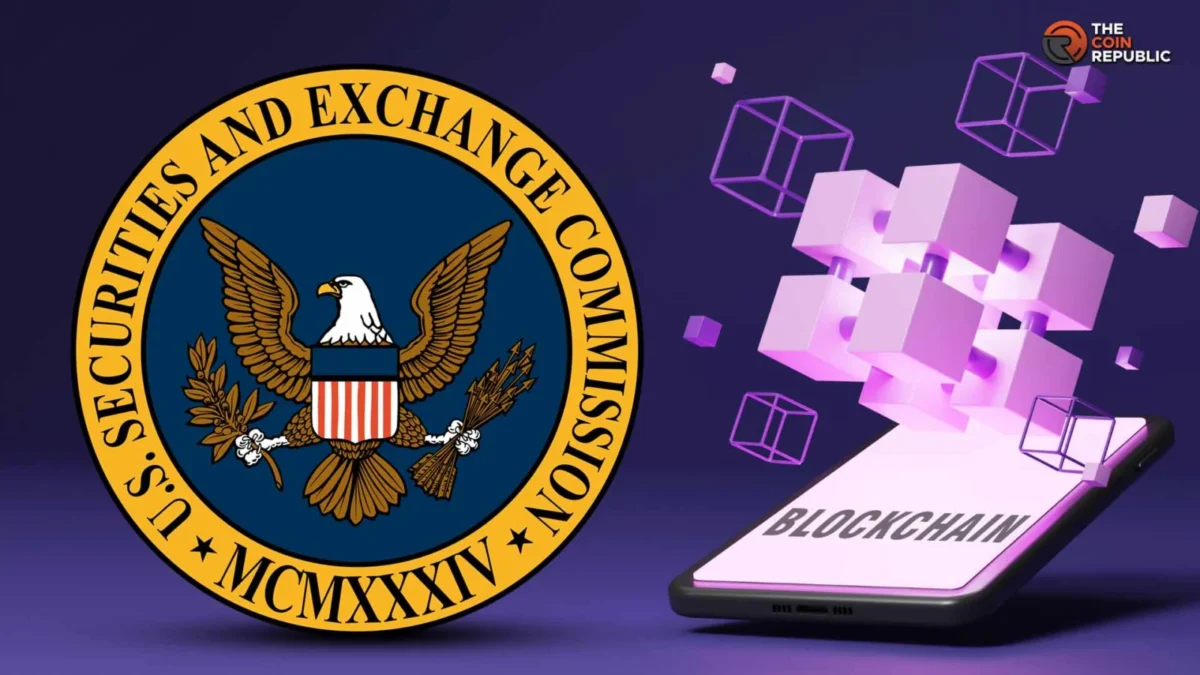
Recent blockchain news highlights that the U.S. Securities and Exchange Commission put forth a proposal this September to modernize its longstanding transfer-agent regulations.
As noted in the SEC’s press release, the update aims to “reflect transfer agents’ current processes and operations, including the use of … blockchain technology in connection with securities offerings and the transfer of shares.”
Blockchain News: On-Chain Registers and Tokenized Stocks
The draft rule permits a transfer agent to keep its master securityholder file directly on a blockchain. Through this proposal, electronic databases such as blockchain ledgers would be authorized to act as the official securities ownership record.
Practically speaking, a properly governed blockchain ledger could supplant the parallel off-chain shareholder register currently utilized by 代币化股票. Should it gain approval, “a blockchain could become the ‘master security file,’ replacing the parallel off-chain ownership records that tokenized securities often still rely on today.”
Presently, two separate records are kept: the on-chain token ledger alongside the traditional register managed by a transfer agent. Legal professionals traditionally treat the latter as the definitive legal owner of a share. The SEC’s initiative would establish the blockchain as the authoritative source instead, cutting out expensive reconciliation processes.
By removing duplicate off-chain shareholder records, the proposed changes could minimize reconciliation needs and clarify legal ownership for tokenized securities.
The SEC stated that these amendments are designed to bring transfer-agent rules up to date for electronic and blockchain-based records while safeguarding required controls and documentation.
Even if blockchain registers are implemented, tokenized stocks will continue to fall under standard securities laws. Coverage of Wall Street’s blockchain developments points out that transfer agents would still oversee mandates like ownership eligibility, along with managing mailings, dividends, and inheritances.
Significantly, the proposal acknowledges blockchain wallet addresses as acceptable securityholder contact details. Nonetheless, adopting blockchain does not translate to open-access tokens; identity verification and transfer limitations would remain “built into the token” within any on-chain framework.
Industry Momentum and Next Steps
This regulatory step mirrors wider movements across the sector. Nasdaq revealed on Sept. 10 that its venture division is investing $100 million into Payward (the parent company of Kraken) to grow tokenized stock infrastructure.
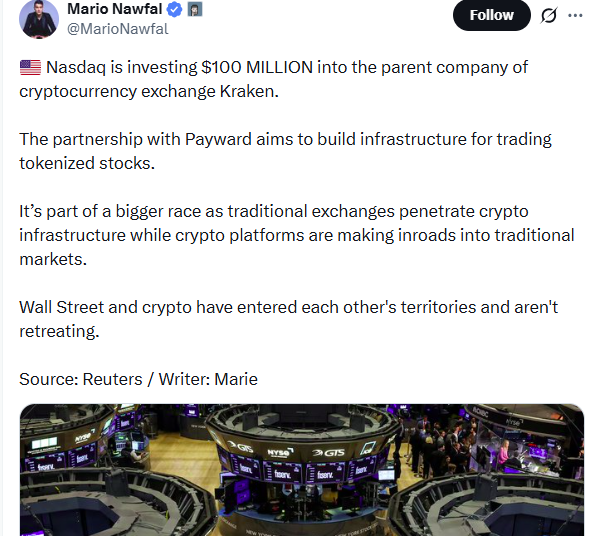
According to Nasdaq, this financial backing will advance “Nasdaq Equity Tokens” hosted on Payward’s xStocks platform, with trading anticipated to launch by mid-2027.
Official SEC rulemaking proceeds following a public comment period. The agency specified in its press release that public comments will stay open for 60 days following publication in the Federal Register.
常见问题解答
- What did the SEC propose regarding blockchain records? The SEC proposed updating transfer-agent rules to allow blockchain ledgers to serve as official master securityholder files for tokenized stocks.
- Will transfer agents still have a role? Yes, transfer agents would maintain required controls, enforce ownership eligibility, and handle items like dividends and mailings.
- How will tokenized stocks change under the rule? The blockchain could replace parallel off-chain ownership records, eliminating the need for expensive reconciliation.
- When will Nasdaq’s tokenized stock trading begin? Trading for Nasdaq Equity Tokens on Payward’s xStocks platform is expected by mid-2027.

 Michael Gachihi Nderitu