

While crypto gaming investors have spent years anticipating a title that successfully brings millions of mainstream users on-chain, that breakout game may still be on the horizon. However, the next high-upside crypto opportunity connected to gaming could instead surface in a more practical sector: the creator economy built around the games audiences already enjoy.
Recent data from Semrush reveals roughly 4,400 monthly U.S. searches for “crypto gaming,” alongside 590 for “Web3 gaming,” and 170 for “gaming tokens,” proving retail interest persists. The core hurdle is that the traditional pitch—embedding a token straight into a game and expecting players to care—has largely lost its appeal.
Instead, a more compelling thesis suggests crypto might not need to function inside the game at all.
Games consistently generate massive economies populated by streamers, YouTubers, modders, communities, tournaments, fan content, sponsorships, and digital culture. If 区块链基础设施 can streamline payouts, reputation building, and economic coordination for these participants, Web3 can capture gaming’s upside without forcing every single gamer to adopt crypto.
That opens up a significantly wider opportunity.
The Old Play-to-Earn Trade Was Too Easy to Copy
The initial wave of blockchain gaming relied on a seductive formula: play the game, earn tokens, and watch those tokens appreciate.
When this model functioned properly, the rewards looked phenomenal. Early participants secured assets that grew in value as fresh players joined the ecosystem, while investors acquired gaming tokens prior to massive community expansion. The whole sector felt like a blend of gaming growth and crypto leverage.
Eventually, the structural weaknesses surfaced.
If individuals participated merely because financial rewards had monetary value, the framework required continuous incoming demand to survive. When token valuations dropped, player motivation declined. If the underlying game lacked the quality to retain users independently of financial incentives, the economy deteriorated rapidly.
This does not signal the death of crypto gaming. Rather, it highlights that the simplified version of the concept was insufficient.
By 2026, gaming-oriented blockchains, wallets, marketplaces, and infrastructure remain operational. Solana continues advancing gaming and entertainment tools, with recent ecosystem activity featuring gaming apps, tournament formats, and consumer distribution via the Solana dApp network. The foundational rails are still under construction.
The primary question now centers on where those rails can generate maximum value.
The Money Around Games May Be More Interesting Than the Token Inside Them
A successful video game produces far more than just gameplay mechanics.
It generates attention.
That attention translates into YouTube content, livestreams, TikTok videos, Discord groups, strategy guides, fan artwork, mods, esports competitions, sponsorships, and brand campaigns. These commercial ventures can thrive for years even if the underlying game never incorporates blockchain technology.
This dynamic is precisely where speculative upside becomes intriguing.
Rather than betting that millions of gamers will suddenly adopt NFTs or in-game tokens, a Web3 platform can focus on the economic activity already flourishing around gaming culture.
Creators seek paid gigs, brands want exposure to gaming audiences, communities desire incentives and status, and platforms require methods to monitor participation. Crypto infrastructure can supply payment rails, tokenized incentives, reputation frameworks, and programmable campaign economics to address these needs.
In this setup, the blockchain acts as background infrastructure supporting the money flow rather than serving as the sole reason someone plays a game.
That approach may prove significantly easier to scale.
GTA 6 Shows How Large the External Opportunity Can Become
Grand Theft Auto VI serves as an ideal illustration, especially since Rockstar has not introduced a crypto token, NFT ecosystem, or blockchain economy for the title.
It does not require one for crypto enterprises to recognize the potential in this cultural wave.
A release of such magnitude generates years of creator content, including vehicle showcases, roleplay streams, challenge videos, guides, map explorations, comedy clips, mods, community gatherings, and brand sponsorships. Millions of viewers can engage with that ecosystem without ever linking a wallet to GTA 6.
An external Web3 platform could still organize creators, distribute rewards, authenticate participation, or allow advertisers to execute campaigns targeting that audience completely independent of Rockstar.
This distinction holds heavy legal and commercial weight—while also presenting a much cleaner investment thesis.
The crypto opportunity is not defined by the belief that “GTA 6 will use this token.”
Instead, the opportunity is that “gaming culture of this scale creates massive economic activity, and crypto infrastructure can capture a portion of it.”
For early-stage investors, this premise is often more compelling because the total addressable market is not restricted by a single game developer’s willingness to integrate blockchain tech.
Creator Economies Give Gaming Tokens a Different Demand Story
Historically, gaming tokens depended entirely on players buying items, staking assets, entering tournaments, covering fees, or earning rewards.
Introducing a creator-economy token brings in an entirely new set of buyers.
Advertisers may require campaign access, brands might fund creator rewards, communities can engage in incentive initiatives, and creators can utilize the token within a platform economy.
This matters because external commercial demand reduces a token’s reliance on players endlessly trading assets amongst themselves.
Should a platform successfully channel genuine advertising budgets into the ecosystem, growth in gaming attention can directly translate into growth for token-linked activity.
This represents precisely the type of leverage speculative markets seek: a compact crypto economy tethered to a potentially massive mainstream audience.
Where Wanted Network Fits
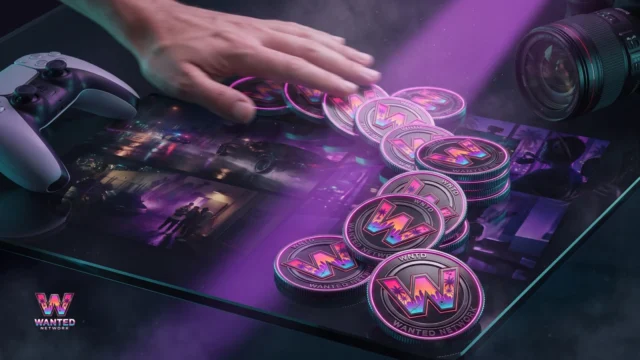
Wanted Network is constructed around this external creator layer operating on Solana.
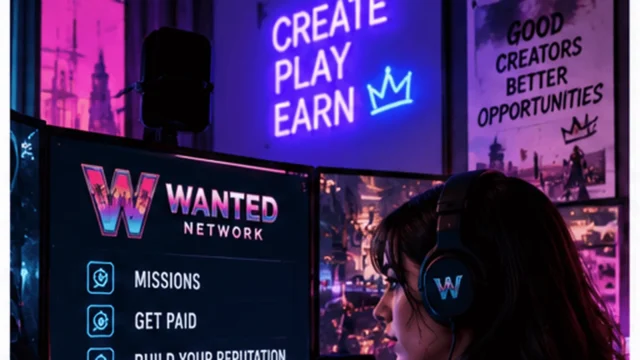
The platform structures its Missions and Bounties to allow creators to execute campaign assignments, collect WNTD-powered rewards, and cultivate Heat reputation. The project does not market its token as an official in-game currency for GTA 6 or any other mainstream franchise; instead, it functions strictly within Wanted Network’s dedicated creator economy.
The more aggressive upside thesis stems from the advertiser perspective.
Wanted Network’s documented Sponsor Campaign Economy is engineered to link qualifying external campaign revenues to WNTD, encompassing open-market token purchases and burns. If brands demand gaming creators, and those campaigns increasingly route through Wanted Network, the platform establishes a direct mechanism for converting mainstream gaming engagement into crypto-economic activity.
That forms the core wager.
The gamble is not that every gamer converts into a token trader.
Rather, it is that a sufficient 量 of creators and advertisers will leverage crypto infrastructure around gaming to make the network itself valuable.
The Next Gaming Winner May Look Less Like a Game
Crypto markets love hunting for the next breakout gaming token because the objective is simple: secure the asset before the game goes viral and capture the expansion of both simultaneously.
However, the category is clearly evolving.
The next major market victor might emerge as a blockchain, marketplace, payment gateway, creator platform, or reputation layer that profits from gaming growth without needing to develop a blockbuster title itself.
Such a positioning offers greater scalability. A single successful game remains just one game, whereas infrastructure can simultaneously service multiple games, communities, and creator audiences.
There are no guarantees that this specific model will yield the next crypto gaming breakout. Creator platforms still demand adoption, advertisers require measurable results, and tokens must maintain sensible economic structures.
Even so, for investors hunting for asymmetrical upside, the thesis presents an appealing shape: mainstream gaming continually generates attention, creators convert that attention into viable businesses, and Web3 infrastructure stands ready to capture a share of the value moving between them.
The next crypto gaming winner may not be the token players view on their screens.
Instead, it could be the one quietly energizing the economy surrounding the screen.
Wanted Network
网站 — https://wantednetwork.io
Discord — https://discord.gg/wantednetwork
X — https://x.com/Wanted_Network
常见问题解答
What is the focus of crypto gaming’s next potential breakout?
The next high-upside opportunity may emerge in the creator economy surrounding games rather than inside the games themselves.
Why did early play-to-earn crypto gaming models struggle?
They relied too heavily on financial rewards and needed constant new demand; when token prices fell, player interest quickly faded.
How does Wanted Network fit into this model?
Wanted Network builds an external creator layer on Solana where creators complete campaigns for WNTD rewards and reputation.

 公关团队
公关团队